
Вот готовая статья на английском языке. Она разбита на логические блоки, содержит введение и заключение, а ее объем составляет более 4000 символов (с пробелами), что идеально подходит для качественного SEO-материала и публикации на вашем сайте Foodguru.
From Bytes to Bites: How Technology is Plating the Future of Fine Dining
Introduction For centuries, the realm of fine dining has been defined by tradition, intuition, and the singular genius of the executive chef. It was a world built on fire, copper pans, and generations of culinary secrets passed down through whispers in the kitchen. Today, however, a profound transformation is reshaping haute cuisine. The clatter of pots and pans is now accompanied by the quiet hum of servers, sensors, and 3D printers. We are witnessing the dawn of a new culinary era where algorithms are just as important as artisanal ingredients. From bytes to bites, technology is no longer merely a back-office tool for inventory management; it is actively plating the future of fine dining, redefining what we eat, how it tastes, and the entirely immersive way we experience a meal.
The Algorithmic Sous-Chef: AI in Flavor Profiling The creation of a new dish has traditionally relied on a chef’s palate and years of trial and error. Enter Artificial Intelligence. Today, advanced algorithms are analyzing molecular structures to identify flavor compounds that share complementary traits, predicting pairings that human chefs might never conceptualize. Imagine a delicate dessert pairing white chocolate with caviar, or roasted strawberries with fermented mushroom garum—combinations born not from a traditional cookbook, but from a vast database of chemical synergies. AI acts as an invisible sous-chef, offering culinary creators a canvas of unprecedented flavor profiles. By processing millions of recipes and chemical breakdowns in seconds, machine learning empowers chefs to push the boundaries of taste, ensuring that the next Michelin-starred masterpiece might just begin as a line of code.
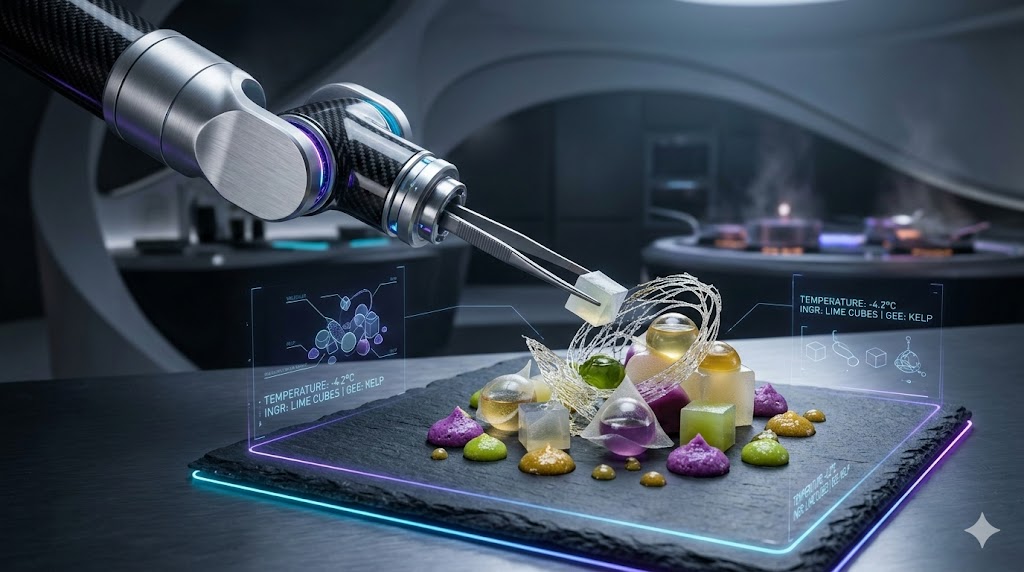
Architects of Taste: The Rise of 3D Food Printing If AI designs the flavor, 3D printing is revolutionizing the architecture of the dish itself. In the upper echelons of gastronomy, presentation is paramount, and chefs are constantly seeking new ways to visually astound their guests. 3D food printers allow culinary artists to construct intricate, geometric shapes and delicate structural marvels that would be impossible to achieve by human hands alone. Beyond mere aesthetics, this technology manipulates texture at a microscopic level. Imagine a beautifully plated purée that has the satisfying crunch of a tuile, or a plant-based protein designed layer by layer to perfectly mimic the complex marbling and mouthfeel of premium Wagyu beef. For high-end restaurants, 3D printing offers absolute precision, consistency, and a theatrical element that leaves diners mesmerized by the sheer impossible beauty of their food.
Beyond the Plate: Augmented Reality and Immersive Environments The future of fine dining recognizes that eating is a multisensory experience that extends far beyond the taste buds alone. Augmented Reality (AR) and sophisticated projection mapping are turning dining rooms into interactive, storytelling theaters. Pioneers in the culinary world are using high-definition projectors to cast dynamic, animated landscapes directly onto the dining table and the plates themselves. A seafood course might be accompanied by the visual of gentle ocean waves rippling across your table, complete with the ambient sound of seagulls and the subtle scent of sea salt diffused into the air. When the meat course arrives, the environment might seamlessly transition into a crackling autumn forest. This level of sensory manipulation deeply enhances the emotional impact of the food, turning a standard tasting menu into an unforgettable, immersive journey.
Hyper-Personalization: Big Data Meets the Dining Room In luxury hospitality, anticipation is everything. Technology is enabling a new era of hyper-personalization, driven by big data and integrated customer relationship management systems. Long before a guest steps foot in the restaurant, the establishment can aggregate data regarding their dining history, specific dietary restrictions, wine preferences, and even milestone celebrations. Smart kitchens can then tailor the tasting menu specifically for that individual—adjusting sodium levels, swapping out allergens without compromising the integrity of the dish, or perfectly timing the delivery of courses based on the diner’s known eating pace. It elevates the concept of traditional hospitality to an exact science, ensuring that every single guest feels as though the entire restaurant experience was built exclusively for them.
Conclusion The integration of advanced technology into fine dining does not signal the death of culinary artistry; rather, it represents a profound evolution. While artificial intelligence, 3D printing, and augmented reality offer incredible new tools, the soul of a truly great meal remains fundamentally human. Technology cannot taste the warmth of a perfectly balanced broth, nor can it replicate the genuine passion a chef pours into their craft. Instead, these digital innovations act as a powerful magnifier for human creativity, removing physical limitations and opening up entirely new dimensions of flavor, texture, and experience. As we look toward the future, the most successful and celebrated restaurants will be those that strike a delicate balance—flawlessly marrying the cold precision of bytes with the deeply emotional, profoundly human joy of the perfect bite.